
Taxi and private hire car
Discover alternative commute options that complement Singapore’s public transport.
Last updated 20 January 2026
Policies
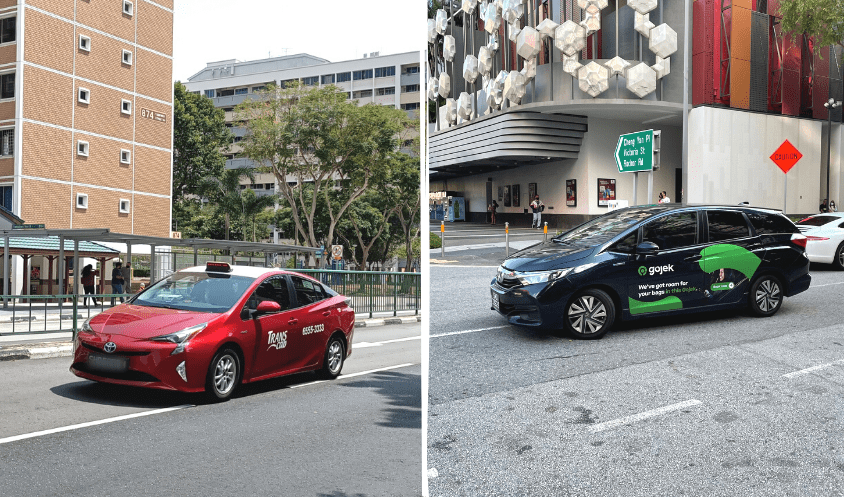
Taxis, and private hire cars (PHCs) complement our bus and rail networks by offering commuters alternative options for more direct commutes. They also help to meet the need for car-like journeys, without requiring commuters to own a car. As the demand and supply for point-to-point transport services continue to evolve, we will ensure that our policies and regulations protect the interests of both drivers and commuters.
Point-to-Point Transport Regulatory Framework
The Point-to-Point Transport (P2P) Regulatory Framework, which aims to protect the interests of commuters and drivers, applies to transport operators with 800 or more taxis or PHCs. The framework was introduced in October 2020 in response to a growing range of P2P transport services. Under the regulatory framework, three types of operator licences are issued:
Street-hail Service Operator Licence (SSOL), which allow taxi operators to provide street-hail services for passenger pick-ups along the roads and at taxi stands; and
Ride-hail Service Operator Licence (RSOL), which allow ride-hail operators to provide app-booking or car-pooling.
Licensees must comply with the conditions of their licences, including meeting LTA’s safety and quality standards. To give drivers and commuters the freedom to choose which platforms to use, licensees must also ensure that partnership arrangements with drivers are non-exclusive. There are currently five SSOL licensees, and seven RSOL licensees.
To keep pace with evolving driver and commuter needs, as well as to keep up with structural changes in the market, MOT and LTA embarked on a review of the industry structure and regulatory framework in September 2023, which was completed in March 2025.
Some of the key measures arising from this review include:
Updating the regulatory regime for taxis and PHCs – e.g. extending the statutory lifespan of taxis from 8 to 10 years; removing call-booking requirements for smaller taxi operators; continuing to suspend the taxi fleet growth cap; reducing the inspection frequency for taxis below 3 years old; increasing the inspection frequency for PHCs above 10 years old; and introducing a three-year lock-in period for business-owned chauffeured PHCs.
Improving the resilience of taxi and PHC services – operators will need to meet new standards for managing operational disruptions to mitigate the impact on drivers and commuters.
Strengthening the contestability of the ride-hail sector – large operators will be subject to additional responsibilities, including higher data disclosure obligations to LTA as regulator, to provide greater assurance that the interests of commuters and drivers continue to be protected.
Improving commuter experience and access to taxi and PHC rides – ride-hail app enhancements to make it easier for families with young children and wheelchair users to indicate their requirements; converting frequently used taxi stops in the Central Business District to P2P stops for use by both taxis and private hire cars for commuter pick up and drop off; new P2P Inclusivity Co-funding Grant to encourage development of ideas to improve accessibility to P2P services, such as for seniors.
Learn more about taxis and private hire cars, and the measures we have announced following our review of the industry structure and regulatory framework [2024 | 2025]..
Protecting the Interest of Drivers and Commuters
Street-hail and ride-hail operators set their own fares, which take into account the supply and demand for such services. Some operators also offer customised services that cater to commuters with pets and families with young children. For every service type, operators have the flexibility to set fares which both their drivers and commuters can accept.
While the Public Transport Council (PTC) does not intervene in the setting of fares, the PTC ensures that fares are clearly communicated, and easy to understand so that commuters can make an informed choice about the type of service to use.

For taxi trips based on metered fares, licensed operators are required to publish the booking charges, metered charges per distance and other surcharges. For ride-hail trips based on flat fares, operators have to make clear to commuters, at the point of booking, the fare that will be charged for the trip. Operators also have to publish the quantum for any additional charges that may be levied (e.g. fee for unplanned additional stops).
To safeguard the interests of drivers and their commuters, PTC will take action against fare evasion by commuters and overcharging by drivers for trips booked through licensed street-hail and ride-hail operators.